
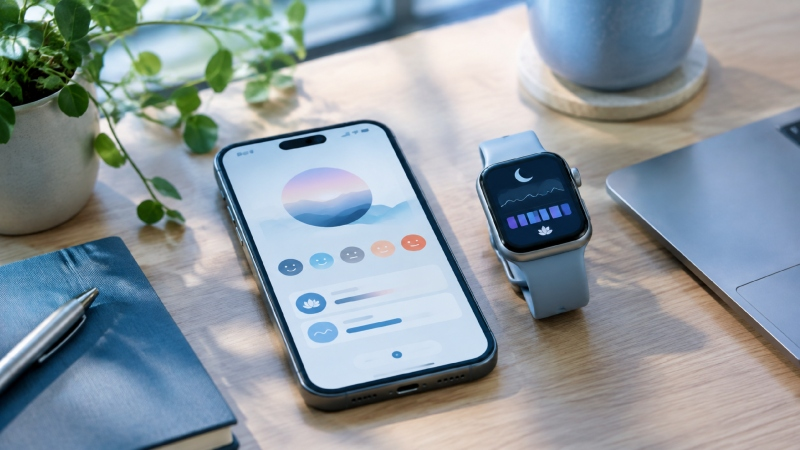
A phone can remind a person to take a break. A sleep tracker can let a person know how well he or she slept. A meditation app can take users through a few minutes of mindfulness reflection after a stressful day. All these examples are ways that technology can be utilized to support everyday mental wellness.
Some tools can help you create healthier habits. Some have limited applications in your mental wellness journey. And some may require sensitive information about your wellbeing in exchange for a subscription.
About this post: The RoarTechMental Tech Infoguide by Riproar is the focus of this guide. Before relying on any of these resources, readers should research them independently and determine for themselves what the source offers. In the meantime, understanding mental wellness technologies can help you make more informed choices about the apps and devices you choose to rely on.
What Is the RoarTechMental Tech Infoguide by Riproar?
It’s a topic area covering apps, websites, and devices built for relaxation, mood tracking, sleep, or finding professional help.
A simple example: if your sleep is all over the place, writing down your bedtime for two weeks can show you something you’d otherwise miss. A quick journal entry after work might show which days drain you most.
That’s the useful part. The limit is just as clear. A record of your habits can’t explain why you feel low, and it can’t spot a medical condition. The National Institute of Mental Health has more on how digital tools can widen access to mental health information and services. Before you try anything, ask what it actually does. A “wellness” label proves very little.
Types of Mental Wellness Apps
Pick by purpose. Once you know what you want, the choice gets easier.
Meditation and Breathing Apps
Guided meditation, breathing exercises, and five-minute calm-down sessions are things that people use during a work break and often practice in bed.
You don’t have to sign up for a subscription and waste your money just to realize it isn’t for you. Just try a free session and feel how a few minutes of breathing with your phone face down can change something.
Mood Tracking Apps
You rate your mood once or twice a day, sometimes adding notes about sleep, exercise, or what happened. Give it a few weeks and a pattern might appear, like Mondays always feeling heavy. That’s worth mentioning to a doctor.
It isn’t proof of a cause, though, and no app can diagnose anything. If you’d rather not store this on your phone, a notebook does the same job.
Online Therapy Platforms
Video calls, phone consultations, or messaging with a qualified professional. It is helpful if you do not have local access or the local waiting list is too long. Before paying, make sure that the therapist is qualified, the program’s cost, and how your data will be used.
Another thing to consider is that a chatbot that gives general advice is not a substitute for a therapist. If you want specific treatment, be sure that there is a qualified professional on the other end.
Smartwatches and Sleep Trackers
Wearables estimate your sleep and log movement and heart rate. Over a few weeks, they can show habits you hadn’t noticed, like sleeping later on weekends.
But the sleep score and the “stress” reading are estimates. They aren’t a diagnosis, and one bad night on the chart is no reason to panic.
How to Choose the Right App
Start with the problem you want to solve. A daily meditation habit? A place to journal? An online therapist?
Then compare two or three apps, not ten. Look at:
- what features it has and whether you need them
- whether there’s real evidence behind its claims
- the privacy policy
- the price, including what it costs after the free trial
- how easy it is to use (if it’s annoying, you’ll stop opening it)
- the provider’s qualifications, if it offers therapy
Be careful with anything that promises instant results or a cure, especially with no credible proof. The American Psychological Association has useful guidance on evaluating mental health apps.
Protect Your Personal Information
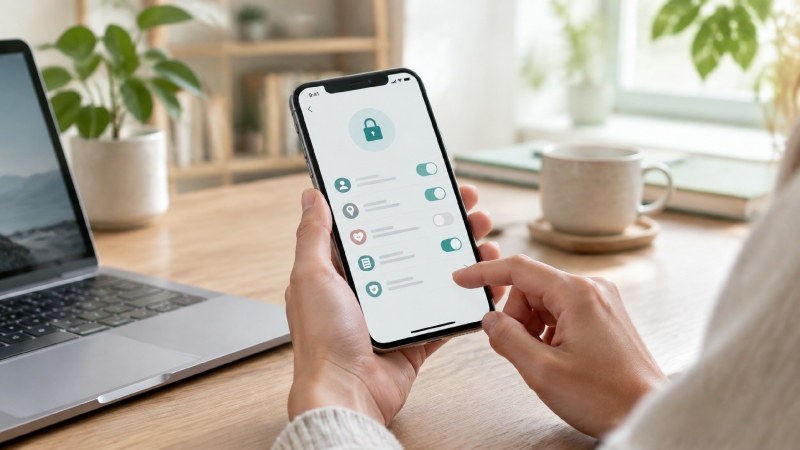
Your mood, sleep, and daily routine are personal. Find out where that data goes before you type it in. Read the privacy policy and look for sharing with advertisers or other companies. Then check the permissions. A basic journal app doesn’t need your contacts or exact location, so don’t give them.
Some simple habits:
- Use a strong password you don’t use anywhere else.
- Give the app only what it needs.
- Turn off extra permissions.
- Check that you can delete your account and data.
- Keep your apps and phone updated.
The Federal Trade Commission’s guide to health app privacy explains how health data can be collected and shared. A slick design and a million downloads still say nothing about privacy.
Can Technology Replace Professional Help?
No, while various apps may be useful in giving you accessible care, they cannot take the place of the services of a professional. A meditation app can bring you through some breathing relaxation techniques, a mood tracker can remind you to log your thoughts to discuss with your doctor later, but neither can make any guarantees.
Same with robots, who can only give you generalized information. Their information may be lacking or false, so do not rely on them to assist you with your care.
If your symptoms persist, worsen, or if they begin to affect your work, sleep, or relationships, then you should seek care from a qualified medical professional. The apps can only be a supplement to that care, but cannot be a substitute for trained care. If you are in an emergency, contact your local emergency services or a crisis hotline. An app is an inappropriate tool for the job.
Common Mistakes to Avoid
Installing five apps in one evening is the classic one. Start with one and see if it sticks. Another is believing the ad copy. Marketing isn’t evidence, so look for plain statements about what the app can and can’t do.
People also skip the privacy settings, which is where a lot of trouble starts. Then there’s reading too much into numbers. A watch or an app can’t tell you whether you have a medical condition. And finally, paying too fast.
Use the free version first and read the renewal terms before you spend anything. You don’t need the latest gadget or the most expensive plan. A basic tool you use daily beats a fancy one that sits unopened.
Frequently Asked Questions
What is the RoarTechMental Tech Infoguide by Riproar?
It’s a topic on technology and mental wellness, including meditation apps, mood trackers, wearables, and online support. For a specific guide or product, check the publisher’s own page.
Are mental wellness apps useful?
Some are. They can help you track habits, practice relaxation, or find support. How useful depends on the app and on what you need from it.
Are mental wellness apps safe?
It varies from app to app. Read the privacy policy, check who created it, and be wary of unproven medical claims before you share personal details.
Can a smartwatch detect mental health conditions?
No. It records physical measurements, and those can’t diagnose a mental health condition.
Do I need to pay for a wellness app?
Not always. Plenty offer free basics. Pay only if the extra features are worth it to you.
Final Thoughts
Technology can help one to adhere to certain wellness routines, ranging from tracking their sleep patterns to performing a guided breathing exercise and more. However, the more features there are, the less likely they are to prove beneficial.
Select carefully, based on personal preferences and priorities, ensure the tool’s data security practices are reliable, and listen closely to your body to understand if it reacts positively to its use. If not, it is perfectly normal to stop using a particular application and spend your time elsewhere.
For members of the RoarTech Mental Tech InfoGuide by Riproar, the next step is to ensure that the information there has a reliable source.
Disclaimer: This article is for general information only. It does not replace professional mental health advice, diagnosis, or treatment. Please consult a qualified healthcare professional about your own health concerns.

Erin Durkheim is a digital content writer and researcher focused on blogging, technology, AI tools, and practical digital guides. Through BloggingHut, Erin shares clear, useful, and easy-to-follow information to help readers learn new tools, improve their digital skills, and work more effectively online.